
Traveling with an Ostomy: Packing Extra Supplies Carry On Tips and Airport Confidence for Peace of Mind Download Your Travel Guide

A trip can feel exciting and stressful at the same time when you live with an ostomy. The destination may be clear, but the questions can start early. How many supplies should you bring? What if luggage gets delayed? What happens at airport security? How do you stay comfortable on a long travel day?
The good news is that many ostomates travel often, including by plane, with the right planning. A calm trip does not require a perfect trip. It requires a practical system, a little extra preparation, and confidence in what your body needs.
This guide covers packing extra supplies, keeping essentials in your carry-on, navigating the airport discreetly, staying hydrated, and building a travel routine that helps you feel more in control.
This article is for general information only and is not a substitute for medical advice. For personal guidance, especially after surgery or before a long trip, check with your ostomy nurse or healthcare provider.
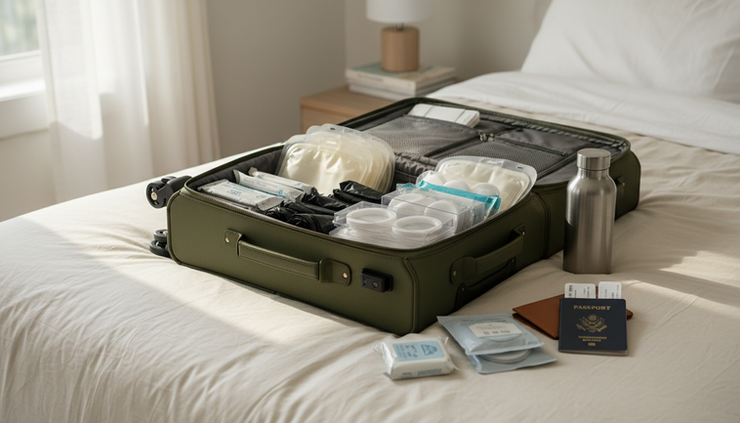
Pack more ostomy supplies than you think you will need
The most reliable travel rule for ostomy supplies is simple: pack extra.
Travel can change your normal routine in small but frustrating ways. Flights get delayed. Weather shifts. Meals happen later than planned. A pouch change that usually happens at home may need to happen in an airport restroom, a hotel bathroom, or a family member’s guest room. Having more supplies than your usual schedule calls for gives you breathing room.
A helpful baseline is to pack more than your expected number of changes. Many people bring at least double their normal amount for the length of the trip, especially when flying or traveling far from home. If the trip is short, packing enough for several unexpected changes can still make sense.
Think beyond pouches. A complete packing list may include:
Ostomy pouches or pouching systems
Skin barriers or wafers
Barrier rings, seals, or paste
Adhesive remover wipes
Skin prep wipes, if used
Disposal bags
Gauze or soft cloths
Scissors, if your barriers are cut-to-fit
Deodorizing drops or lubricant, if part of your routine
A small mirror
A change of clothes
Any prescription or over-the-counter items recommended by your healthcare provider
Pre-cut supplies before you leave if you use cut-to-fit barriers. This can reduce stress at security and save time in small bathrooms. If you do need scissors, pack a pair in checked luggage and confirm current airline and airport rules before departure.
A good packing strategy separates supplies into more than one place. That way, one lost bag does not create a crisis.
Bag | What to pack | Why it helps |
Carry-on | Supplies for travel day plus extras | Keeps essentials with you if checked luggage is delayed |
Personal item | One small emergency change kit | Easy access during the flight or in the airport |
Checked bag | Backup supplies for the full trip | Gives you extra volume without overfilling your carry-on |
Day bag at destination | One discreet change kit | Helps during tours, meals, events, or long drives |
The goal is not to pack out of fear. It is to pack for flexibility.
Keep your essentials in your carry-on
Checked luggage is useful, but it should never hold the only supplies you need. Bags can be delayed, rerouted, or hard to access during a travel day. Your carry-on is your safety net.
Pack the supplies you would need for at least the flight, airport time, transportation, and the first day at your destination. If possible, keep a smaller kit inside your personal item, such as a backpack, crossbody bag, or tote that fits under the seat.
A practical carry-on ostomy kit can include:
Two or more pouch changes
Disposal bags
Wipes and remover products
Barrier ring or seal
A folded change of underwear or clothing
Hand sanitizer
A small odor control product, if used
A zip-top bag for organization
A note with product names and sizes
Keep liquids, gels, and sprays easy to remove if needed. Medical supplies are commonly allowed through airport screening, but rules can vary and may change. Before a flight, check the current Transportation Security Administration guidelines and your airline’s instructions.
A small written list of your supply brands, product numbers, and sizes can also help. If you run out, a family member, pharmacy, ostomy supplier, or clinic may be able to help you identify what you need more quickly.
Do not rely on memory during a stressful moment. Travel days are busy. A list keeps things simple.

Build a discreet airport plan before you arrive
Airport confidence often comes from knowing what you will do before you need to do it. A little planning can turn an uncertain experience into a series of manageable steps.
Start by choosing clothing that helps you feel secure and comfortable. Soft waistbands, layers, and easy-access outfits can make a long day easier. If your pouch area feels sensitive, avoid tight belts or waistbands that press directly on it for hours.
Next, map out the airport experience in your mind:
Arrive with extra time.
Use the restroom before security if needed.
Keep supplies easy to reach.
Ask for help or a private screening if you want one.
Use a restroom near the gate before boarding.
Board with your essentials, not separated from them.
In U.S. airports, TSA officers screen many types of medical devices and supplies. You can tell an officer you have an ostomy before screening begins if that makes you more comfortable. You can also request a private screening. A simple phrase can help:
“I have an ostomy and medical supplies in my bag. I would like a private screening if additional screening is needed.”
You do not need to give a long explanation. You can be brief and calm. Some travelers also carry a medical travel card from an ostomy organization or healthcare provider. This can help explain the condition without having to say much out loud.
If a pat-down is needed, you can ask the officer to explain each step before it happens. You can also state if an area is tender. The goal is to protect your comfort and dignity while completing the screening process.
Before boarding, use the restroom even if you do not feel urgent. Hotel check-in, rental car lines, rideshares, and long taxi waits can stretch the time between restroom breaks. Emptying your pouch before each major travel step can reduce worry.
Stay hydrated and keep your routine as steady as possible
Travel can disrupt the basics: water, meals, sleep, movement, and bathroom timing. For ostomates, those changes can affect comfort. A steady routine helps your body handle the trip.
Hydration matters, especially with an ileostomy, during warm weather, while walking a lot, or when flying. Airplane cabins feel dry, and travel days can make it easy to skip water to avoid restroom trips. That can backfire. Dehydration can leave you feeling tired, lightheaded, or uncomfortable.
Bring a reusable water bottle and fill it after security. Sip regularly instead of waiting until you feel thirsty. If your healthcare provider has recommended oral rehydration solutions or electrolyte drinks, pack them in a travel-friendly form, such as powder packets.
Food routines matter too. Travel may bring new foods, larger meals, late dinners, or fewer familiar options. You do not have to avoid enjoying the trip, but it can help to keep one or two routine anchors.
For example:
Eat a familiar breakfast on the travel day.
Pack snacks that usually work well for you.
Go slowly with unfamiliar foods.
Keep meal timing as steady as possible.
Know where restrooms are before long tours or events.
Give yourself time for pouch care in the morning.
If you take medication, set phone reminders based on the time zone you are in or the schedule your healthcare provider recommends. Keep medication in your carry-on with your ostomy supplies.
Long sitting can also affect comfort. On flights or road trips, stand, stretch, or walk when it is safe to do so. Even a short restroom walk can help you check your pouch, empty if needed, and reset mentally.

Use accessible planning to lower stress
Accessible planning is not only for major mobility needs. It can mean setting up the trip so your body has what it needs, when it needs it. For ostomates, that may include restroom access, seating choices, supply storage, meal timing, and privacy.
Start with transportation. If you are flying, choose flights with enough connection time. Tight layovers can create stress if you need a restroom, a pouch change, or extra time through security. A slightly longer connection can be worth it if it protects your comfort.
Seat choice can also help. An aisle seat may make restroom access easier during a flight. If you prefer more privacy and fewer people moving past you, another seat may feel better. Choose based on your routine and comfort, not on what someone else recommends.
At the destination, look at the first few hours after arrival. This is when many travelers feel tired and less organized. Plan how you will get from the airport to your hotel or lodging. Know whether you can check in early or store bags. Keep one small kit accessible until you are settled.
For hotels, request what you need without overexplaining. You might ask for:
A room with a private bathroom
A mini fridge if needed for medication or supplies
A room closer to the elevator
Extra trash bags
Early check-in when available
Accessible planning can also mean pacing the trip. Schedule breaks between activities. Avoid stacking a long flight, a long transfer, and a formal event without time to change, rest, or eat. Peace of mind often comes from leaving margins in the day.
If you are traveling with family or friends, decide what you want them to know. Some people prefer to share details. Others prefer privacy. Both choices are valid. A simple plan can help:
Tell one trusted person where your backup kit is.
Choose a phrase that means you need a restroom break.
Build in private time each morning.
Keep your own supplies with you, even in group travel.
This kind of planning does not make the trip smaller. It makes the trip more accessible and more enjoyable.
Prepare for the unexpected without expecting the worst
Peace of mind grows when you know you can handle common problems. That does not mean assuming something will go wrong. It means giving yourself options.
Before leaving, take a photo of your ostomy supply labels. Include product names, sizes, and order numbers if shown. Store the photos on your phone and in a cloud backup if you use one. You can also print a small copy for your travel folder.
If you are traveling within the United States, identify possible sources of help before you go. This may include your ostomy supplier’s customer service line, your healthcare provider’s office, local medical supply stores, or nearby hospitals. You may never need them, but having the information can calm your mind.
Pack some supplies in the luggage of a trusted travel companion if you feel comfortable doing so. This is especially useful for longer trips. It gives you one more backup if a bag is misplaced.
A few small items can also make travel easier:
A waterproof pouch or bag for supplies
A nightlight for unfamiliar bathrooms
Travel-size odor control products
Extra zip-top bags
Soft clothing for bloating or tenderness
A laundry bag for unexpected clothing changes
Think about disposal as well. Most restrooms have trash bins, but not all are convenient or private. Opaque disposal bags can help you manage pouch changes discreetly. In hotel rooms, extra trash bags can make cleanup easier.
Mental preparation matters too. If you feel anxious, practice the steps at home. Pack the kit. Say the airport security phrase out loud. Try a short day trip before a longer flight. Familiar actions become easier when travel day arrives.

Travel with more confidence, one plan at a time
Traveling with an ostomy takes planning, but it does not have to take away your freedom. Extra supplies help you stay ready. A carry-on kit protects your essentials. A discreet airport plan gives you language and choices. Hydration, routine, and accessible planning help your body feel supported from departure to arrival.
Start with the basics: pack more than you need, keep supplies close, give yourself extra time, and plan for privacy when you want it. Each trip teaches you what works best for your body and your travel style.
For a more complete checklist, packing plan, and airport preparation tips, download the comprehensive travel guide before your next trip. Keep it with your travel documents, review it while packing, and use it to travel with greater peace of mind.


Comments